


South Africa's new automotive transition: The adoption of EVs

By: Dylan Naidoo
Rising fuel costs, coupled with growing anxiety over global tensions, have caused a sudden shift in South Africa's automotive market. Gone are the traditional petrol or diesel recommendations for new car buyers, as over the past year, the market for electric and hybrid vehicles (EVs & PHEVs) has risen. According to a report by the National Association of Automobile Manufacturers of South Africa (NAAMSA), EV sales rose from 276 EVs sold in Q1 2025 to 544 EVs in Q1 2026, a 97% increase over last year, nearly double the growth in just one year. PHEVs have also shown significant growth in the market, rising from 241 PHEVs sold in Q1 2025 to a staggering 1277 PHEVs sold in Q1 2026; in other words, around a 430% growth in just one year. Those are not figures to be ignored, especially since the bias towards EV and Hybrid adoption has been strong for a few years, and it's not hard to see why.
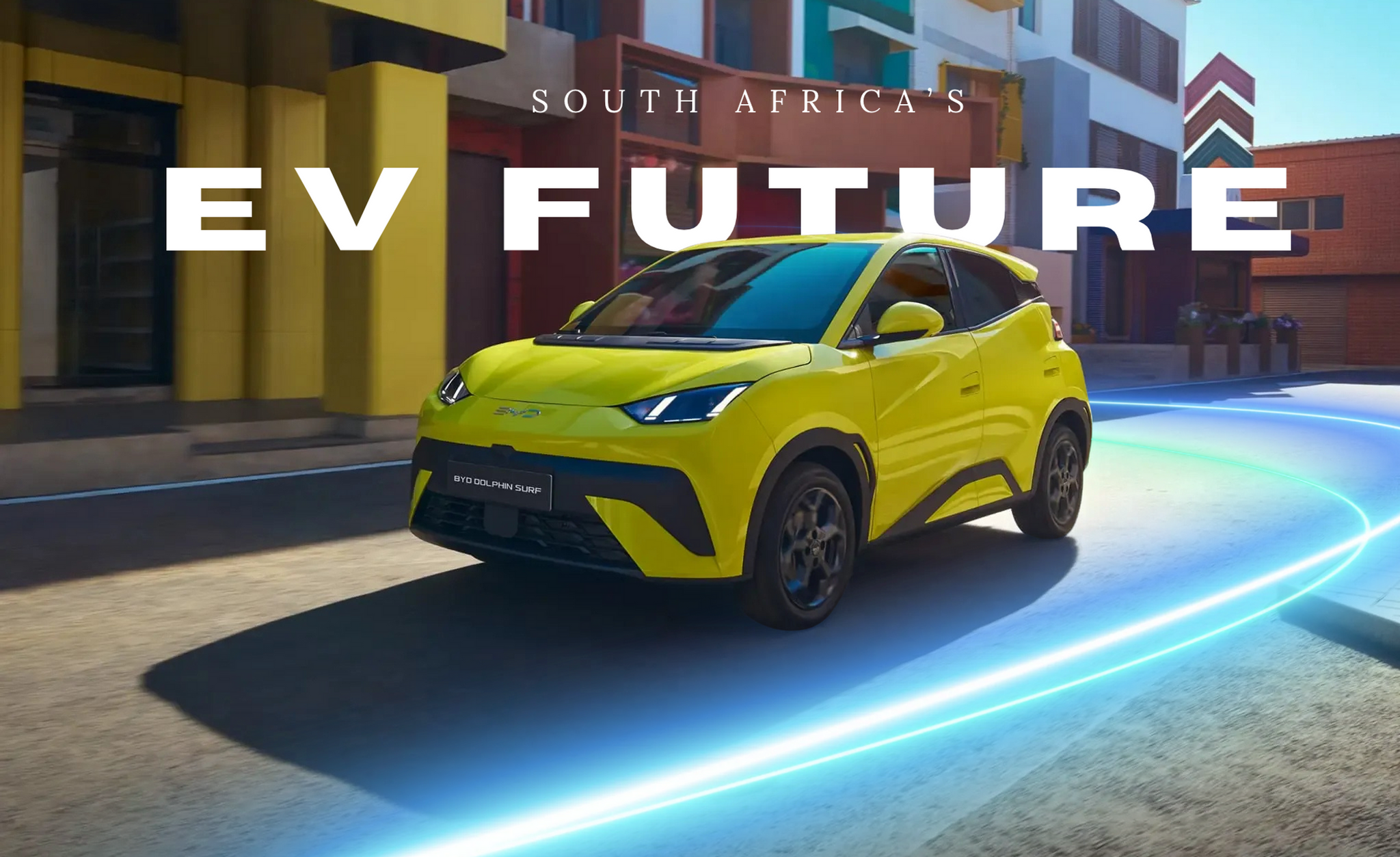
The South African grid, riddled with load-shedding issues, has long been cited as a main cause for concern over EV adoption. However, considering the supposed “end of load shedding” for a while now (according to the South African Government), it seems this may be giving buyers more confidence in EVs. This comes also as EV prices have dropped drastically. For instance, in 2022, before the influx of Chinese EVs entered the market, the cheapest EV you could buy in South Africa was the Mini Cooper SE hatch, with a steep R709,400 price tag, according to Chad Lückhoff from Autotrader. However, since Chinese EVs entered the market and a 150% tax reduction on qualifying EVs imported to South Africa (Reported by Stella Nolan from EV Magazine), EV prices have dropped drastically. As of the writing of this article, the cheapest EV you can buy in South Africa is the Geely E2 Aspire, with a starting price of R339,900 (See Geely’s website for details). It doesn’t end there, however, as the second cheapest EV, the BYD Dolphin Surf beat the Geely to the market, and now sits as SA's best-selling EV, selling 302 units in April 2026 alone, according to Cale Nuttall from CarMag.
South Africa getting to this position is definitely something not to be ignored, and I believe this growth is driven not only in the passenger vehicle sector. For the commercial sector, EVs have become an attractive prospect. In an article by Larry Classen in Cape Business News, he quotes GreenCape’s Electric-vehicles-as-a-service, arguing that EVs tend to have far fewer running costs, where while an ICE (Internal Combustion Engine) panel van costs R2,53/km to run, an EV only costs R0,52 to run. This is not a small number, and statistics like this are something that can get many, many businesses interested in EV adoption. However, like many other people, I still had my doubts.
Of course, I’m not denying the benefits of adopting an EV; there are quite clear environmental and personal benefits for owning an EV. However, remember that NAAMSA statistic? While EV growth has been prevalent, PHEV and Hybrid growth has been way more rampant. From my point of view, there are certain elements that make it rather easy to market a hybrid or PHEV as a viable step up from an ICE vehicle. We can see this with the product page for the Toyota Corolla Cross Hybrid, mentioning that the combination of both a petrol engine and electric motor ensures “that you get everything you need out of your vehicle, with the added benefits of more kilometres per tank and fewer CO2 emissions.” Essentially, it shows that hybrids are a logical step up from ICE cars, where you have the convenient features of an ICE car, like fast refuelling times, whilst also having the benefits of hybrid technology, like more powerful and efficient engines. However, for EVs, marketing the car changes.
For this section of the article, I want to bring attention to the study done by Mateko et al. (2026) that details a variety of challenges that should first be addressed to enable EV adoption in South Africa. I highly suggest you read their study for further information on this topic, but for this article, I will give a brief rundown of the challenges of full EV adoption in South Africa highlighted in the article, as well as my thoughts.
Current Political Landscape
Mateko et al. (2026) argue that proper commitment, support and government intervention could potentially accelerate EV adoption in South Africa, and I tend to gravitate to this perspective. Further concerns raised by respondents in the study by Mateko et al. (2026) say that “persistent ambiguity surrounding implementation schedules and incentive schemes is reflected in respondents' demands for more robust government support and clearer policy direction.” I agree with this response. I believe that the public should have been provided with clearer wording.
Barriers negatively affecting the transition to electric mobility in South Africa’s automotive sector.
Mateko et al. (2026) argues that certain obvious barriers affect EV adoption in South Africa, pointing out aspects such as an unreliable energy grid, lack of EV charging stations, as well as up-front cost.
Focusing attention on the energy grid, it is clear that there is a lack of trust surrounding South Africa’s energy grid, considering the notorious load shedding issues. According to Mateko et al. (2026), respondents in their study bring up this issue, raising concern for South Africa’s grid.
Another concern raised in Mateko et al. (2026) study, and a concern raised by all respondents, is support infrastructure. Whilst charging stations can indeed be installed at homes, for the most part, this renders EVs more like a common commuter car only rather than a standard vehicle that can be used long distance. Let’s say I buy an EV, whilst yes, I can charge my EV at home, as of the writing of this article, the closest EV charging station away from me is 15km away from me, whilst the closest petrol station is barely a kilometre away. On the surface, it's not an issue, but issues surrounding this arise for using EVs on long trips away from home, effectively causing the infamous range anxiety issues.
One of the other major factors affecting faster EV adoption is price. Upfront cost is an important factor for prospective buyers, and whilst EV prices have drastically gone up since 2022, current EV prices are still quite high, and respondents in the study done by Mateko et al. (2026) voice this concern as current EV prices remain unaffordable for the entry-level vehicle market.
In closing
A large focus of this discussion was on both the sudden growth in EV and Hybrid adoption, as well as reflecting on further elements that may impact this sudden sales surge, especially global tensions affecting fuel prices. This discussion further emphasised the impact of EV adoption in the commercial sector, citing various areas in which EVs can prove beneficial to businesses. However, this discussion also analysed these claims by delving into challenges that face EVs entering the South African market, including poor government commitment, charging infrastructure and EV costs. With these elements analysed, judging South Africa’s EV future remains a tricky topic, but what is certain is that I am positive at the moment that EVs remain a tempting option for those who can afford them, especially considering that the future of petrol and diesel as a fuel also remains questionable.
I recommend reading Mateko et al. (2026) research study to learn more: https://www.sciencedirect.com/science/article/pii/S2667095X26000061


