


CX TURNING MARKETING JOURNEYS INTO HUMAN CONNECTIONS
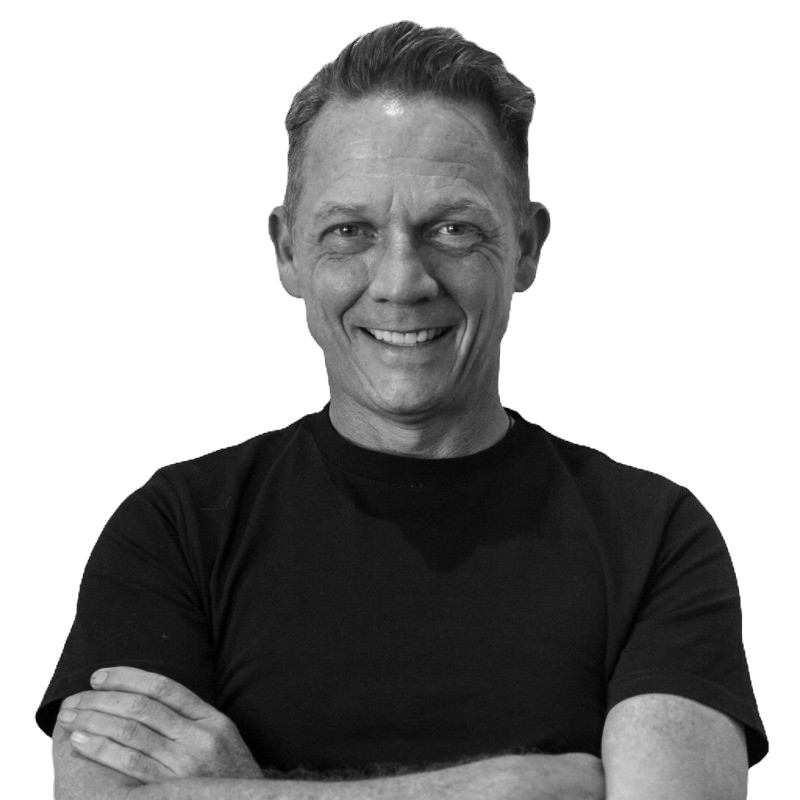
By: Terry Flack | Business Success Leader of Cannect Digital

INTELLIGENTLY AUTOMATED. INTENTIONALLY HUMAN
Pop quiz, KZN. A Ballito homeowner clicks your Google Ad at 7:40pm on a Tuesday and fills in your form. What happens next? If the honest answer is “someone will see it tomorrow”, you’ve already lost her. Not to a better product. To a faster, warmer competitor down the N2.
Here’s what most leaders miss. Customer experience doesn’t start at the sale. It starts at the first click. From that moment, every form, pause and reply is CX. A confusing landing page is CX. A slow, generic response is CX. Repeating your story to three different people? That’s CX too. And it’s costing you.
It matters here. KZN drives roughly 16% of South Africa’s GDP, and our buyers are wired in. 51.7 million South Africans are online, and around 95% of them use WhatsApp. It is our default commercial channel. Industry benchmarks show 90% of WhatsApp messages are read within 3 minutes, while email replies lag at six hours or more. Your prospect is one thumb-tap away from you, and from your competitor. ONE JOURNEY, DESIGNED WITH INTENT
“The future of customer experience isn’t human or automated. It is intelligently automated and intentionally human.”
THE ENEMY IS FRICTION, NOT AUTOMATION
Steve Jobs said it at WWDC in 1997: “You’ve got to start with the customer experience and work backwards to the technology.” Too many businesses do the opposite. They buy the platform, then bend the customer around it.
The result is automation theatre. The chatbot that won’t let you reach a person. Seven generic nurture emails. The endless form. On WhatsApp, the unmonitored inbox. It looks clever on the dashboard. It quietly kills revenue.
The evidence agrees. Qualtrics’ 2026 study of 7,001 consumers found understanding is the behaviour most tied to resolving an issue, and AI agents scored lowest on it. Their advice: design for the handoff, not just the deflection.
McKinsey’s 2026 B2B Pulse, covering nearly 4,000 decision makers, found buyers now use an average of ten channels. Two top reasons they switch suppliers? Inconsistent information across teams, and not being able to reach a knowledgeable rep. Let that sink in.
So, what does good look like? Picture an Umhlanga professional services firm running LinkedIn and Google campaigns.
Discovery. A prospect sees a LinkedIn post. The relationship has begun.
The click. She lands on a page built around the exact intent that brought her there.
Smart capture. Three questions only: what she needs, how urgent it is, how she prefers to talk.
Instant acknowledgement. Within seconds, WhatsApp confirms her enquiry, with a 30-second welcome video from the partner who’ll help her. Trust starts before anyone picks up a phone.
Choice. She keeps chatting on WhatsApp, books a call straight into a diary, or replies by email.
The handoff. Automation alerts the right person and passes on the source, her answers and her history. The human arrives prepared, not cold. She never repeats her story.
The technology disappears. She remembers a firm that was quick, relevant and human.
“Use AI to understand faster. Use people to understand deeper.”
MEASURE YOUR TIME TO HUMAN
Here’s the metric every KZN leader should track: Time to Human. It’s the gap between a prospect showing real intent and having a useful conversation with someone who can help.
The idea isn’t new. A classic 2011 Harvard Business Review study of 1.25 million leads found firms that responded within an hour were nearly seven times more likely to qualify the lead than those who waited even an hour longer. With WhatsApp in every pocket, that hour has shrunk to minutes.
Break it into three stages: time to acknowledgement (seconds), time to context (minutes) and time to human. Then watch enquiry-to-meeting conversion and where people drop off.
This is where trust is built. Stephen M.R. Covey showed in The Speed of Trust that when trust goes up, speed goes up and cost comes down. Every prompt, informed reply is a deposit in that account. Each well-timed nudge moves the prospect down the funnel, from curious to confident to committed.
THE KZN BOTTOM LINE
Peter Drucker put it best: “Because the purpose of business is to create a customer, the business enterprise has two, and only two, basic functions: marketing and innovation.” Your ads, SEO, LinkedIn and video budget create the opportunity. CX decides whether it becomes a relationship or an enquiry that dies quietly in someone’s inbox.
Stop treating CX as a service issue or an IT project. It’s a commercial design discipline. The Durban, Pietermaritzburg or Richards Bay business that wins won’t be the one that automates the most. It will be the one that uses technology to remove friction, carry context and create better human moments at precisely the right time.
Automate the admin. Protect the relationship. Then ask yourself: how long does your next customer wait to meet a human?


